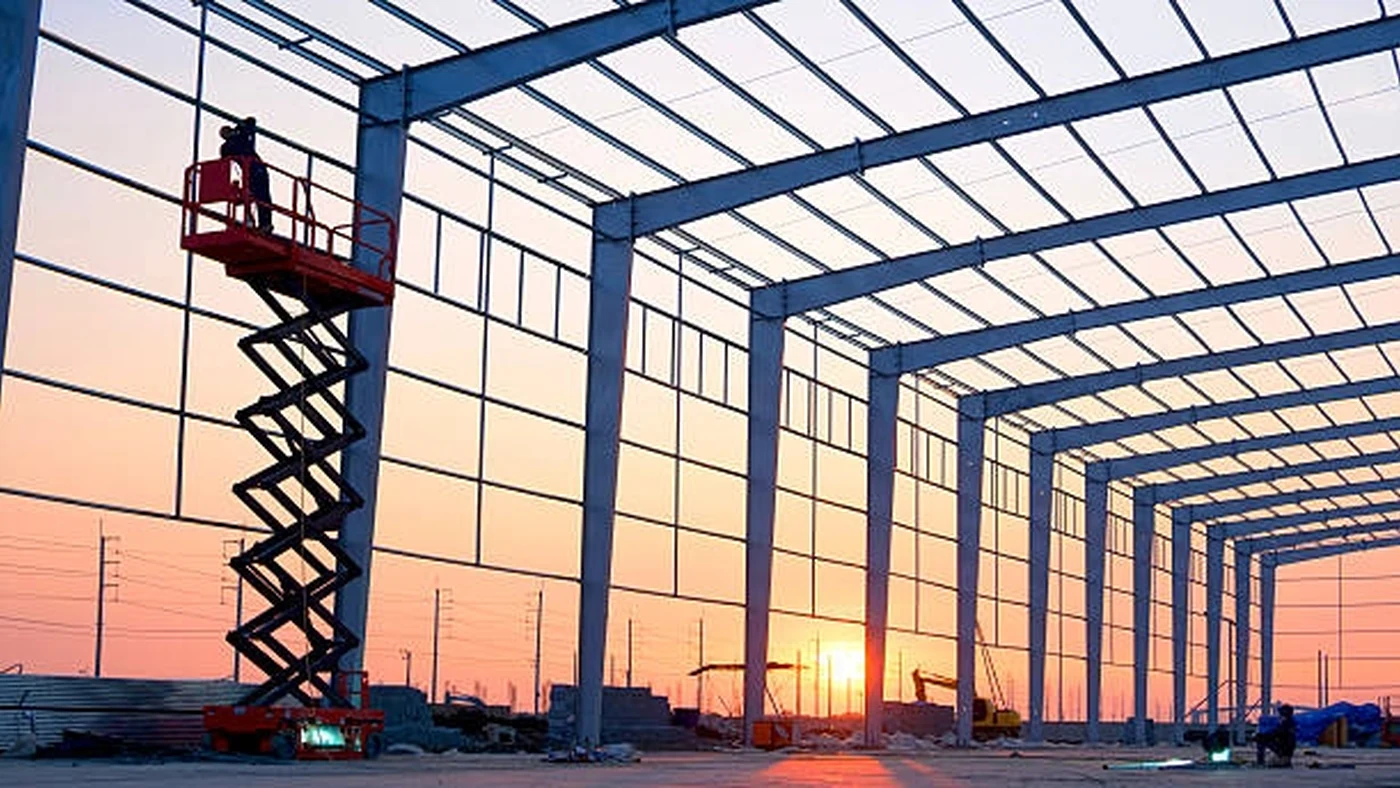
In September 2024, a stretch of Indiana farmland outside New Carlisle held corn. Thirteen months later it held seven operational data center buildings, roughly half a million AI chips already running Anthropic’s models, and, at the peak, more than four thousand construction workers arriving each day in a town whose year-round population is about nineteen hundred. The full campus is planned for thirty buildings and more than 2.2 gigawatts of power — enough for 1.6 million homes.
Amazon calls the project Rainier. The site lead, a fourteen-year veteran of AWS builds, said publicly that he had never seen the company move this fast. To hit the pace he brought on four general contractors at once and had Amazon redesign the facility midway through construction to shave weeks off deployment. In parallel, Amazon was prefabricating twenty-thousand-pound electrical “skids” in Kansas and Utah factories that let a data hall accept servers within two to three weeks of the slab being poured, rather than the fifteen weeks a stick-built hall traditionally needs. The company says the approach could eventually support a pipeline of more than a hundred data centers a year.
This is not construction as the industry has run it before. The scale is different, the pace is different, the sequence is different, and the buyer is different. Owners and delivery partners who treat a hyperscale campus as a big, fast version of the last mission-critical job discover, usually around month six, that the standard playbook does not compose. The playbook needs to change — and it is changing, in the field, on the campuses actually getting energized on schedule.
A Different Kind of Demand
U.S. data center construction spending crossed forty-one billion dollars in 2025, more than triple its 2023 level, and starts on the books already point higher. A single hyperscale campus can now consume as much steel and cable as a small city’s downtown: 300-plus acres, tens of miles of foundation piles, tens of millions of pounds of structural steel, more than a hundred miles of medium-voltage underground cable, and over a million square feet of roof. That is one campus, one buyer, one program — and many operators are building several of them at once, to the same reference design.
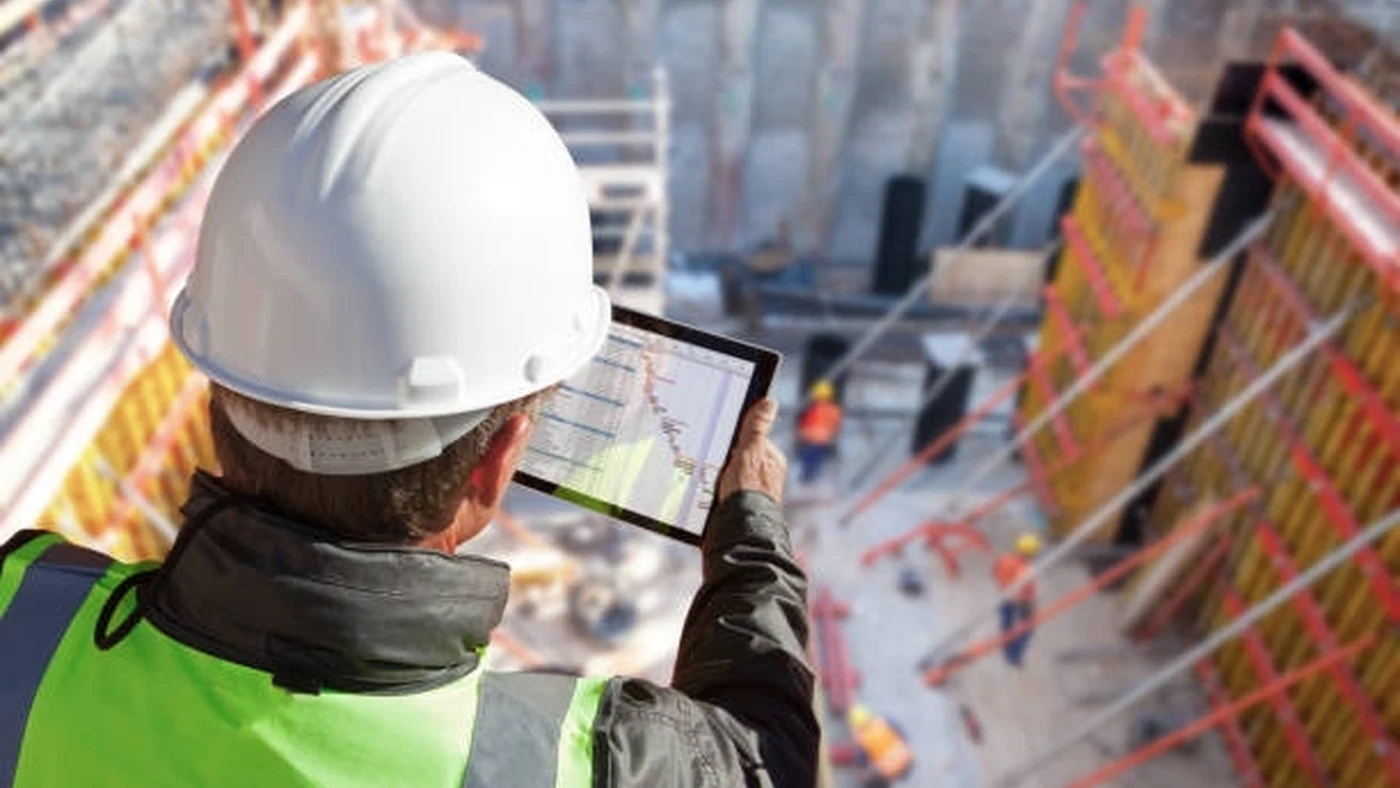
Four things about that demand are genuinely new. Scale, first: peak crews on the largest campuses now run four to five thousand workers on a single site, up from the seven-hundred-worker peaks that used to define a very large mission-critical job. Pace, second: multi-gigawatt sites are being energized in one to three years rather than the four to seven the industry planned around, and hyperscalers publicly compare their programs on months, not fiscal years. Parallelism, third: ten to fifteen trades work simultaneously across multiple buildings that are each in a different construction and commissioning phase, on the same campus, on the same day. And buyer discipline, fourth: the operators sponsoring the work run their own delivery organizations, own their own designs, and treat the general contractor as one execution partner rather than the program owner.
None of those four is an incremental change from a large industrial or mission-critical project. Each shifts what the delivery system has to do. Together they define a demand pattern the industry has not built the muscle for yet. The programs that hit their dates redesigned the muscle. The programs that slip are usually running the old system at a pace it was never sized for.
Where the Standard Process Breaks
Most of the pieces of a standard construction process still work at hyperscale. The problem is what happens where they touch each other. A morning stand-up across ten or more trades runs sixty to ninety minutes when it is done the old way, and by the time it ends the assumptions in it are stale. A single change on Building C at eleven in the morning propagates to Buildings A, B, and D by shift turnover, and each trade gets the news through its own foreman on a separate phone call. The cascade takes hours to settle. On a five-thousand-person campus, hours are dates.
Commissioning is where the fracture usually shows up first. Data centers are commissioned in levels labeled L0 through L6, and each level assumes prerequisites are met by the trades feeding it. When mechanical work runs a week late on Building B, the commissioning engineer with the Level 3 electrical testing certification who was supposed to be in that building on Monday is now stranded, and probably borrowed by Building D, which has its own dependency chain waiting on him. Nearly six in ten operators say they cannot reliably find qualified commissioning specialists in the first place. Losing one to a scheduling mismatch is not a minor inefficiency — it is a week off a critical path that everyone else is running against.
The standard tools do not carry this load. Spreadsheets, phone trees, and daily huddles were designed for a job with a few hundred people, one building at a time, and a schedule that changed on the week rather than the hour. Under hyperscale conditions they degrade into a coordination tax that shows up on the P&L as productivity loss. Industry analysis puts a five percent labor-efficiency improvement on a 100 MW build somewhere between five and ten million dollars. The gap between the programs that hit their date and the ones that don’t is usually a stack of coordination decisions that each looked small in isolation and were catastrophic in aggregate.
Sequencing the Campus, Not the Building
The old mental model treats a project as a building with a schedule. The hyperscale mental model treats a campus as a portfolio of buildings, each in a different phase, sharing one labor pool, one material flow, one commissioning bench, and one power envelope. The unit of sequencing is the campus. The unit of accountability is the campus. The schedule that matters is not Building B’s Gantt; it is the interlock between B’s Gantt, C’s Gantt, and the moment the shared substation and switchgear can accept load.
This changes how planning is done. Trade allocation becomes a portfolio problem rather than a project problem — the pipefitters finishing in Building C release electricians into Building B, and both moves have to be planned against the badging, safety briefings, and tool staging that turn a cross-campus crew move into a twenty to forty-five minute event. Certified specialists get pre-scheduled across buildings, not assigned to buildings. Long-lead equipment is staged against campus milestones rather than building milestones. Even the daily coordination cadence changes: the operators running these programs well have replaced the ninety-minute morning stand-up with tighter, tool-supported, minute-level notifications that reach every affected trade at once and settle within the shift rather than across it.
The Rainier program is instructive on the point. Four general contractors are not four projects run in parallel — they are one campus program with four execution partners, sequenced against a shared substation, a shared workforce, and a shared design Amazon owned and revised in flight. Take away the campus-level view and the four GCs become four separate optimizers, each locally rational, together incoherent.
The Embedded Delivery Team
The other structural change is who is sitting in the trailer. In a traditional capital project, the owner shows up for progress meetings and reads the reports. In a hyperscale program, the owner has an embedded delivery team on the site full-time, running program controls, cost, scheduling, MEP, quality, commissioning, and safety alongside the general contractors, with clear decision rights and a direct line to the operator’s executive. The site lead is an owner, not a visitor.
There is a reason the model has moved this way. When the schedule is measured in months and the design is being revised in flight, decisions cannot survive a two-week loop back to headquarters. Change orders, redesigns, sequencing swaps, and specialty-crew reallocations happen in the same week they are surfaced, and someone with owner authority has to be in the room when they do. Embedded delivery teams also carry the campus view that no single GC has — they are the ones who can move a certified commissioning specialist from Building D to Building B on a Tuesday, and they are the ones who catch the pattern when the same failure mode shows up in three buildings and needs a design fix rather than three field fixes.
The role that has emerged around this is a delivery partner that operates as an extension of the operator: standing up the program controls and reporting cadence the operator’s executive team will actually read, integrating with the GCs without becoming another layer of process, and holding the horizontal view of the campus so that the daily decisions land inside a program the operator still owns. That role did not really exist ten years ago at this scale. It exists now because the demand made it necessary.
When the Grid Owns the Date
A campus can hit every civil milestone on the plan and still miss its energization date, because the schedule that ultimately matters is not the one the general contractor controls. In January 2026 Google’s head of energy market development said publicly that utilities in many markets are quoting the company four to ten years to connect a new load, and that in one case a utility quoted twelve years just to study the interconnection request. Interconnection wait times that ran under two years for projects built between 2000 and 2007 now run over four years for projects built between 2018 and 2024, and roughly 2,300 gigawatts of generation and storage sit in queues waiting to move. Of everything that entered the queue between 2000 and 2019, only about thirteen percent had reached commercial operation by the end of 2024.
The operators moving the fastest are treating power as a design constraint rather than a procurement task. Some are reusing infrastructure originally built for a different customer — Meta and AEP Ohio have proposed drawing 250 MW from a New Albany substation that was constructed for an Intel fab that has yet to open. Others are signing directly for nuclear, natural gas, or on-site generation, sometimes running the campus behind the meter for years before the transmission upgrade lands. Amazon’s Indiana program is paired with a natural gas plant acquisition that is expected to provide fifteen percent of the local utility’s power by the end of 2026.
The point for the delivery system is not that grid interconnection is hard. Everyone in the industry now agrees it is hard. The point is that a construction plan that pretends power will be there on the promised quarter, because the substation looks close on the map, is a construction plan that is going to slip. The programs that don’t slip make the utility, the substation, and the transmission upgrade first-class objects in the campus schedule, sequenced and staffed with the same discipline as the buildings themselves. Where energization dominates the critical path, it belongs on the same page as the pour schedule, not in a separate risk register the operator reads once a quarter.
What the Buyer Now Expects
The hyperscale operator is not the mission-critical buyer of a decade ago. These are companies that have industrialized data center delivery internally — they own the reference design, they roll out identical sites across multiple regions, and each of them runs an internal delivery organization that has already been through dozens of builds. They know their own numbers. They know what a fair labor curve looks like on a five-thousand-worker campus and what a legitimate commissioning schedule looks like on a Level 4 handoff. They expect the same fluency from the partners on the site.
What follows from that is a very specific set of expectations. Program controls that produce the same view the operator’s own executive is looking at, not a monthly deck translated for their benefit. Field-level data on productivity, absenteeism, and quality captured daily rather than mined out of timesheets at month-end. Design revisions absorbed inside the running schedule rather than treated as scope disputes. Commissioning managed as a program from L0 through L6, with the specialists pre-scheduled across the campus, not scrambled for in the last quarter. Safety, quality, and cost held to a standard that assumes the operator will read the same dashboards the site lead reads. And a real answer, when it is asked, about how the campus will be energized on the quarter it was promised.
A decade ago most of that was optional, an upgrade reserved for a flagship project. It is now the baseline for the work. The delivery partners who will still be doing this in five years are the ones adapting their processes and systems to that reality — running the campus as a portfolio, embedding on the operator’s team, integrating power into the schedule, and building the field discipline the hyperscale buyer already runs internally. The demand is different. The delivery system is finally catching up to it.